春满四合院

春满四合院
News& Event

"Digital Intelligence Empowerment Boosts Healthy China Initiative" Academic Seminar Successfully Held

Author: Hong Hang Date: 2025-11-07

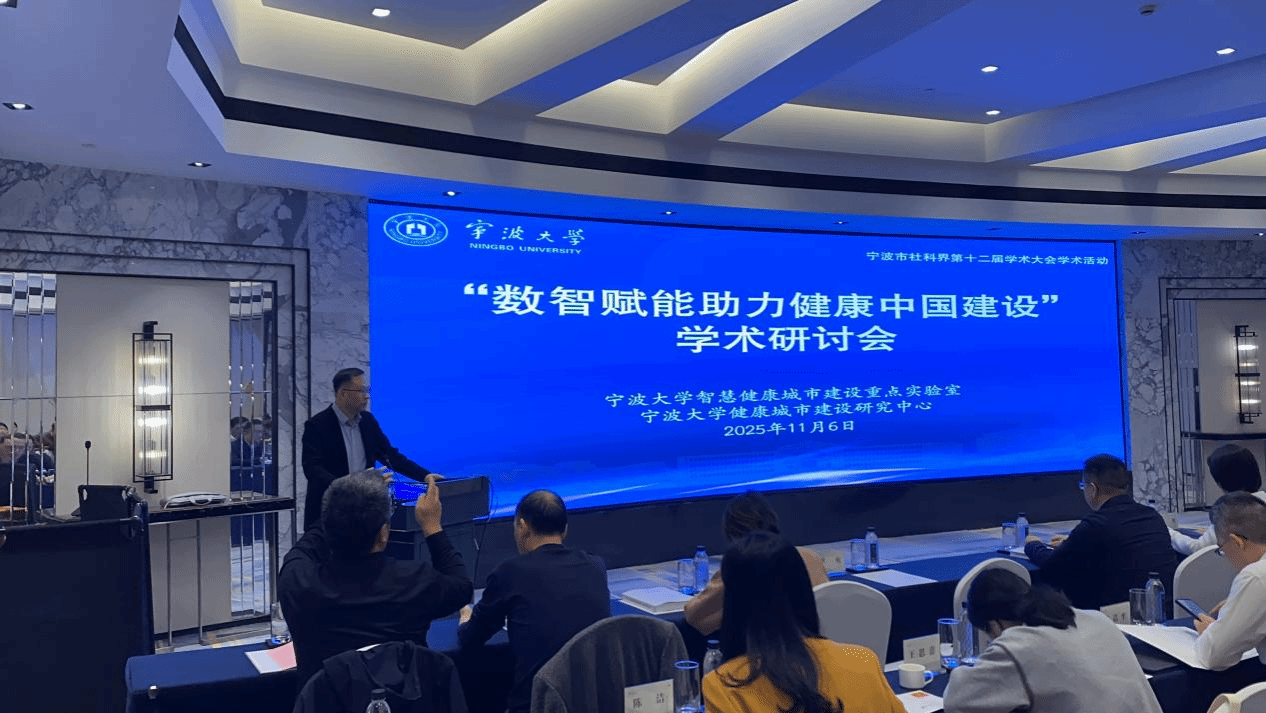
On November 6, the academic seminar "Digital Intelligence Empowerment Boosts Healthy China Initiative," hosted by the Ningbo University Key Laboratory for Smart Healthy City Construction and the School of Public Health, Faculty of Medicine, Ningbo University, was held at the Ningbo Fubang Hotel. The seminar was included as part of the academic activities of the 12th Academic Conference of the Ningbo Social Sciences Circle and aimed to gather wisdom from all sides to explore how digital intelligence technologies can empower the Healthy China Initiative. Attendees included Gao Yi, Director of the Zhejiang Provincial Patriotic Health Development Center; Zhang Ying, Director of the Scientific Research Management Office of the Ningbo Federation of Social Sciences (Academy); Wang Xingbo, Director of the Patriotic Health Work Office of the Ningbo Municipal Health Commission; and Yang Xiaowei, Deputy Director of the Humanities and Social Sciences Department of Ningbo University. Over 70 participants attended, including staff from the Healthy City Construction Research Base, leaders and professionals from various practical teaching bases of preventive medicine at Ningbo University, leaders and related staff from district (county, city) Centers for Disease Control and Prevention, and graduate student representatives from the School of Public Health, Ningbo University.

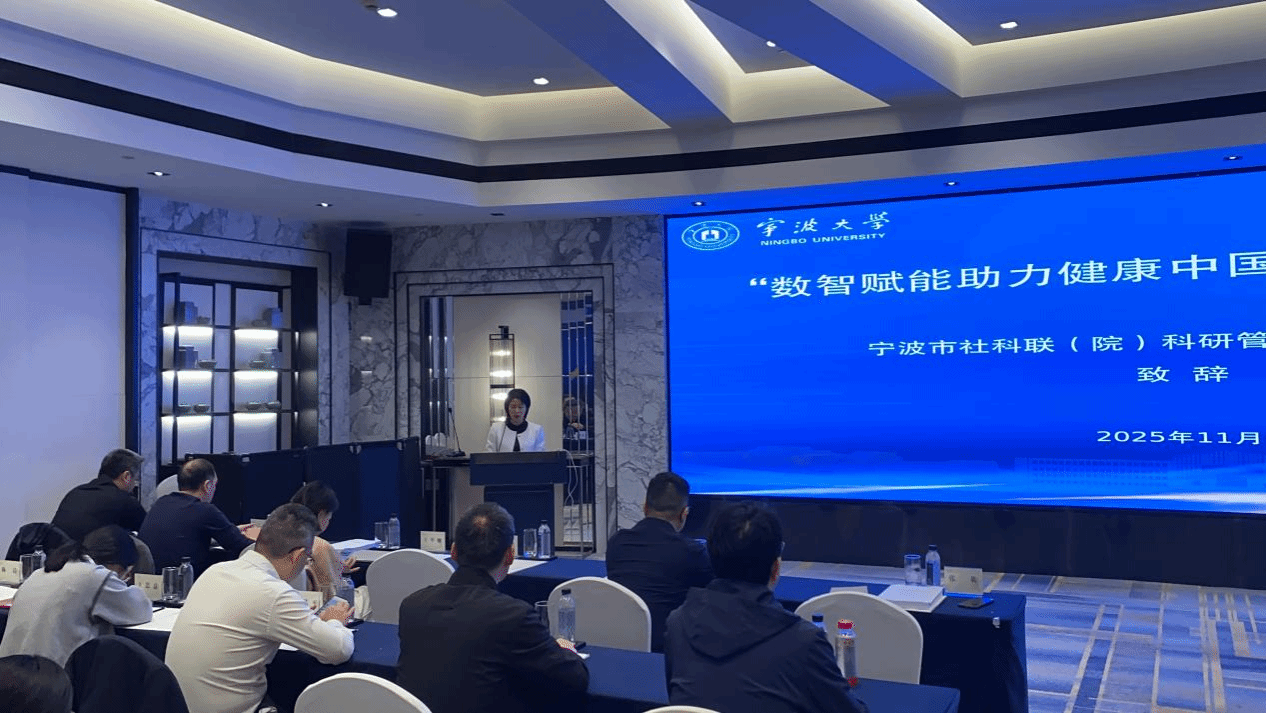
At the opening ceremony, Zhang Ying and Yang Xiaowei delivered speeches. They extended a warm welcome to the attending leaders, experts, teachers, and students, affirmed the achievements made in the laboratory's development, and raised higher expectations and requirements for its future growth.

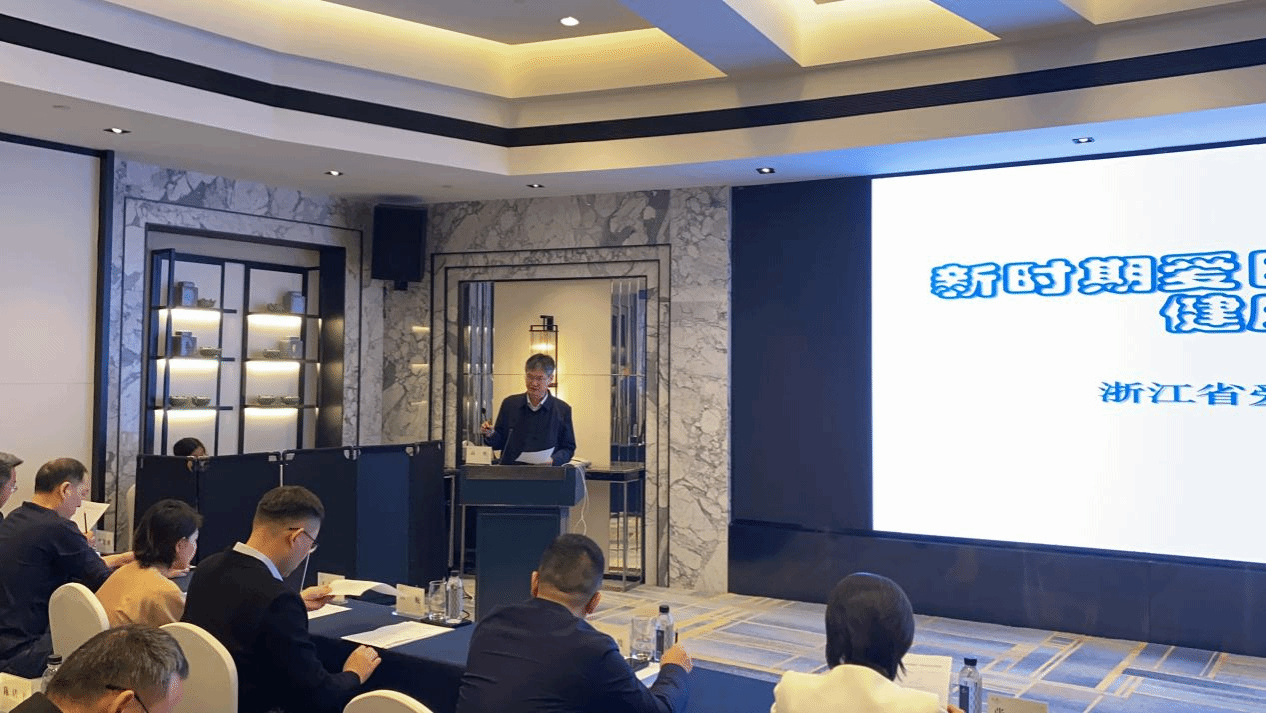
During the keynote report session, Gao Yi focused on healthy city and town development in the new era, integrating the fine traditions of the Patriotic Health Campaign with the needs of modern urban development. Addressing core tasks such as environmental improvement, optimization of health services, and cultivation of healthy habits, he elaborated on the implementation pathways for healthy city construction from policy, theoretical, and practical perspectives, charting the direction for the base's development. Associate Professor Hong Hang from the School of Public Health, Faculty of Medicine, Ningbo University, provided a detailed report on the laboratory's background, progress since its establishment, and future research directions.

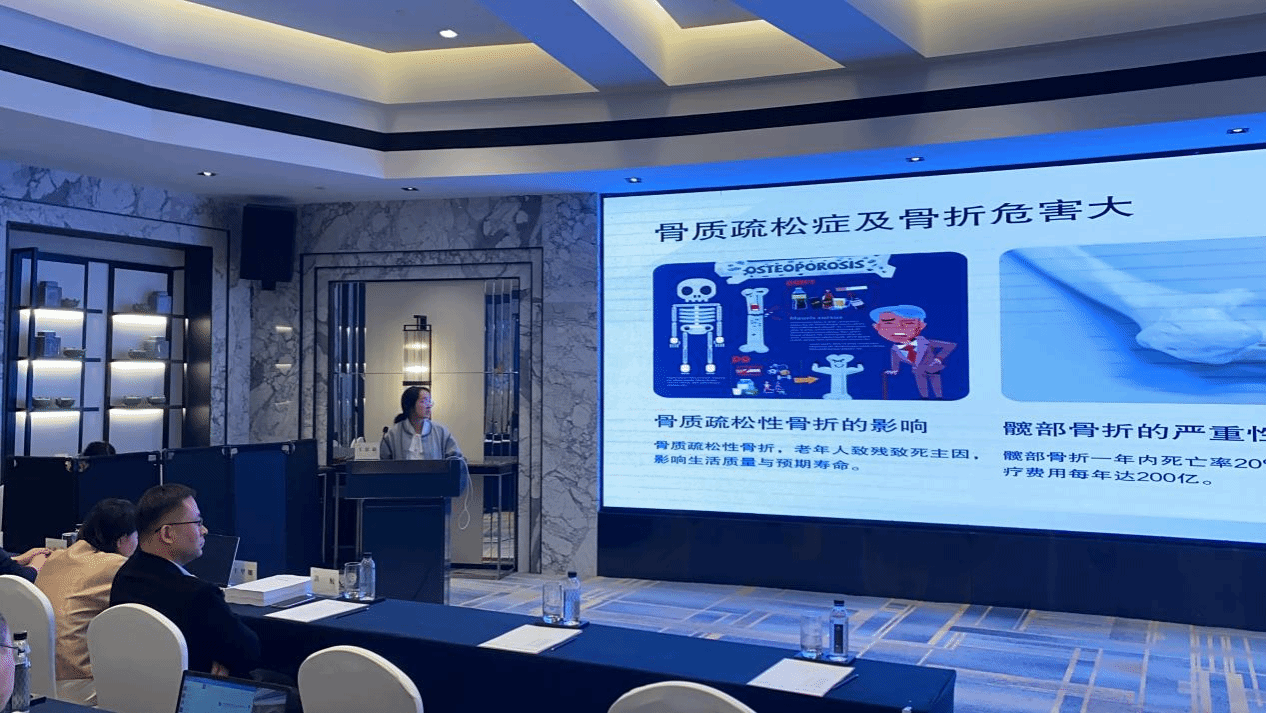
The seminar also invited 11 relevant experts from Ningbo's disease control institutions. They conducted discussions on topics including healthy city development, community health service needs and governance through the integration of medicine and sports, the application and effectiveness of integrated chronic disease clinics in grassroots medical-preventive patient management, intelligent health education prescription generation technology based on residents' health cloud data, evaluation of comprehensive osteoporosis intervention effectiveness, the application of a smart "medical-police-fire" linkage mechanism in pre-hospital emergency care, a big data-based intelligent early screening model and strategy for lung cancer, research and design of a student health system in a big data environment, construction and evaluation of a prediction model for chronic kidney disease incidence among the elderly based on a health medical big data platform, big data-based weight management and the integration of sports and medicine, exploration of a service evaluation indicator system for home-based hospice care, and grassroots chronic disease management models empowered by digital intelligence. They shared their experiences and practices, explored new trends and challenges in the current process of healthy city development, and provided new ideas for the laboratory's next steps.

Focusing on the theme "Digital Intelligence Empowerment Boosts Healthy China Initiative," this seminar not only addressed breakthroughs in technological pathways but also aimed to build an interdisciplinary and cross-sectoral communication platform, promoting deep integration across medicine, public health, social sciences, data science, policy research, and other fields. In the future, efforts will further outline the application scenarios and practical pathways of digital intelligence technologies in the health sector, explore new data-driven health governance models, and provide theoretical support and decision-making references for the development of healthy cities and the high-quality advancement of health initiatives in Ningbo and across the country.
About us - News& Event -
News& Event

"Digital Intelligence Empowerment Boosts Healthy China Initiative" Academic Seminar Successfully Held

Author: Hong Hang Date: 2025-11-07

On November 6, the academic seminar "Digital Intelligence Empowerment Boosts Healthy China Initiative," hosted by the Ningbo University Key Laboratory for Smart Healthy City Construction and the School of Public Health, Faculty of Medicine, Ningbo University, was held at the Ningbo Fubang Hotel. The seminar was included as part of the academic activities of the 12th Academic Conference of the Ningbo Social Sciences Circle and aimed to gather wisdom from all sides to explore how digital intelligence technologies can empower the Healthy China Initiative. Attendees included Gao Yi, Director of the Zhejiang Provincial Patriotic Health Development Center; Zhang Ying, Director of the Scientific Research Management Office of the Ningbo Federation of Social Sciences (Academy); Wang Xingbo, Director of the Patriotic Health Work Office of the Ningbo Municipal Health Commission; and Yang Xiaowei, Deputy Director of the Humanities and Social Sciences Department of Ningbo University. Over 70 participants attended, including staff from the Healthy City Construction Research Base, leaders and professionals from various practical teaching bases of preventive medicine at Ningbo University, leaders and related staff from district (county, city) Centers for Disease Control and Prevention, and graduate student representatives from the School of Public Health, Ningbo University.

At the opening ceremony, Zhang Ying and Yang Xiaowei delivered speeches. They extended a warm welcome to the attending leaders, experts, teachers, and students, affirmed the achievements made in the laboratory's development, and raised higher expectations and requirements for its future growth.

During the keynote report session, Gao Yi focused on healthy city and town development in the new era, integrating the fine traditions of the Patriotic Health Campaign with the needs of modern urban development. Addressing core tasks such as environmental improvement, optimization of health services, and cultivation of healthy habits, he elaborated on the implementation pathways for healthy city construction from policy, theoretical, and practical perspectives, charting the direction for the base's development. Associate Professor Hong Hang from the School of Public Health, Faculty of Medicine, Ningbo University, provided a detailed report on the laboratory's background, progress since its establishment, and future research directions.

The seminar also invited 11 relevant experts from Ningbo's disease control institutions. They conducted discussions on topics including healthy city development, community health service needs and governance through the integration of medicine and sports, the application and effectiveness of integrated chronic disease clinics in grassroots medical-preventive patient management, intelligent health education prescription generation technology based on residents' health cloud data, evaluation of comprehensive osteoporosis intervention effectiveness, the application of a smart "medical-police-fire" linkage mechanism in pre-hospital emergency care, a big data-based intelligent early screening model and strategy for lung cancer, research and design of a student health system in a big data environment, construction and evaluation of a prediction model for chronic kidney disease incidence among the elderly based on a health medical big data platform, big data-based weight management and the integration of sports and medicine, exploration of a service evaluation indicator system for home-based hospice care, and grassroots chronic disease management models empowered by digital intelligence. They shared their experiences and practices, explored new trends and challenges in the current process of healthy city development, and provided new ideas for the laboratory's next steps.

Focusing on the theme "Digital Intelligence Empowerment Boosts Healthy China Initiative," this seminar not only addressed breakthroughs in technological pathways but also aimed to build an interdisciplinary and cross-sectoral communication platform, promoting deep integration across medicine, public health, social sciences, data science, policy research, and other fields. In the future, efforts will further outline the application scenarios and practical pathways of digital intelligence technologies in the health sector, explore new data-driven health governance models, and provide theoretical support and decision-making references for the development of healthy cities and the high-quality advancement of health initiatives in Ningbo and across the country.